

Clean Coal Technology Market Set to Soar: Innovations Driving Greener, Efficient Energy Solutions by 2032
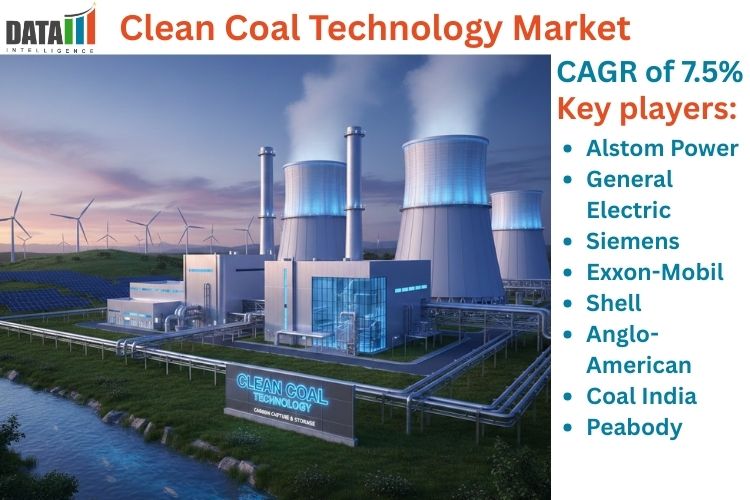
Clean Coal Technology Market
The Clean Coal Technology Market is expected to grow at a CAGR of 7.5% during the forecast period (2024-2031).
The Clean Coal Technology Market is redefining energy sustainability by enabling lower emissions, higher efficiency, and cleaner coal-based power generation worldwide.”
AUSTIN, TX, UNITED STATES, February 25, 2026 /EINPresswire.com/ -- Market Overview:— DataM Intelligence
The Clean Coal Technology Market represents a critical intersection between traditional fossil fuel infrastructure and modern environmental compliance requirements. As global energy demand continues to rise, coal remains a significant component of the power generation mix in emerging and developed economies alike. Clean coal technologies (CCT) aim to reduce the environmental impact of coal-based power generation by minimizing emissions of sulfur dioxide (SO₂), nitrogen oxides (NOx), particulate matter, mercury, and carbon dioxide (CO₂). These technologies include flue gas desulfurization (FGD), selective catalytic reduction (SCR), integrated gasification combined cycle (IGCC), and carbon capture, utilization, and storage (CCUS). The market is increasingly shaped by stringent emission regulations, decarbonization commitments, and the need to modernize aging thermal power plants.
To Download Sample Report Here: https://www.datamintelligence.com/download-sample/clean-coal-technology-market
Market growth is driven by regulatory mandates for emission control systems, rising investments in carbon capture technologies, and retrofitting initiatives across coal-fired power plants. The carbon capture and storage segment leads the market due to increasing carbon neutrality targets and policy support for industrial decarbonization. Geographically, Asia-Pacific dominates the market, primarily due to its high coal dependency, rapid industrialization, and strong investments in emission control systems in countries such as China and India.
Key Highlights from the Report:
The Clean Coal Technology Market is projected to grow at a CAGR of 7.5% from 2024 to 2031.
Carbon capture, utilization, and storage (CCUS) remains the leading technology segment.
Asia-Pacific accounts for the largest market share due to heavy coal-based power generation.
Power generation is the dominant end-user segment in the market.
Regulatory pressure on sulfur and nitrogen oxide emissions fuels retrofitting demand.
Technological advancements in IGCC and advanced flue gas treatment are reshaping market competitiveness.
Market Segmentation:
The Clean Coal Technology Market is segmented based on technology type, application, and end-user industries. By technology, the market includes flue gas desulfurization (FGD), selective catalytic reduction (SCR), electrostatic precipitators, integrated gasification combined cycle (IGCC), and carbon capture, utilization, and storage (CCUS). Among these, CCUS leads the market due to its direct role in reducing carbon dioxide emissions from coal-fired power plants. Governments and energy companies are increasingly investing in CCUS as part of broader carbon neutrality goals and emission trading schemes.
Flue gas desulfurization systems hold a significant share as well, particularly in countries with strict sulfur dioxide emission standards. These systems are widely deployed in both new and retrofitted power plants. Selective catalytic reduction systems are also gaining traction due to tightening NOx emission norms, especially in developed economies.
Based on application, the market is divided into power generation and industrial applications. The power generation segment dominates, accounting for the majority of installations, as coal-fired power plants remain key contributors to electricity supply in several economies. Industrial applications, including cement, steel, and chemical manufacturing, are emerging as growth areas, especially where carbon capture technologies are integrated to reduce industrial carbon footprints.
By end-user, the market includes utilities, independent power producers (IPPs), and heavy industrial operators. Utilities remain the largest end-user group, driven by regulatory compliance and the need to extend the operational life of existing thermal power assets through emission control upgrades.
Speak to Our Analyst and Get Customization in the report as per your requirements: https://www.datamintelligence.com/customize/clean-coal-technology-market
Regional Insights:
Asia-Pacific leads the Clean Coal Technology Market, supported by extensive coal-fired power infrastructure and rising environmental awareness. Countries such as China and India are implementing stricter emission norms while continuing to rely on coal for energy security. As a result, there is substantial investment in flue gas desulfurization units, low-NOx burners, and carbon capture demonstration projects. Japan and South Korea are also investing in high-efficiency, low-emission (HELE) coal technologies to reduce environmental impacts.
North America represents a significant market, driven by policy incentives for carbon capture projects and environmental compliance standards. The United States has seen investments in carbon capture and storage initiatives, particularly in partnership with industrial sectors and energy producers. Retrofitting of aging coal plants with advanced emission control systems is a key driver in this region.
Europe is characterized by a transition-oriented approach, where clean coal technologies are deployed primarily to reduce emissions during the gradual phase-out of coal. Countries such as Germany and Poland continue to utilize coal while investing in emission reduction technologies to align with European climate targets.
The Middle East & Africa and Latin America are emerging markets, with selective adoption of clean coal solutions in regions where coal-based power generation remains economically viable. Infrastructure development and regulatory modernization are expected to shape future growth in these regions.
Market Dynamics:
Market Drivers
The primary driver of the Clean Coal Technology Market is the increasing stringency of environmental regulations targeting greenhouse gas emissions and air pollutants. Governments worldwide are enforcing emission standards that require power plants to install advanced pollution control systems. Additionally, growing global electricity demand, particularly in developing economies, necessitates continued coal usage in the near term, thereby creating demand for emission mitigation technologies. Rising awareness about climate change and international commitments under global climate agreements are further accelerating investment in carbon capture and storage systems.
Technological innovation also plays a significant role in market growth. Advancements in integrated gasification combined cycle (IGCC) technology and improvements in carbon capture efficiency are enhancing operational feasibility and reducing long-term costs. Financial incentives, tax credits, and carbon pricing mechanisms are further encouraging energy companies to adopt clean coal solutions.
Market Restraints
Despite its growth potential, the Clean Coal Technology Market faces several restraints. High capital expenditure and operational costs associated with carbon capture and storage systems remain major challenges. Many clean coal technologies require significant upfront investment, making them less attractive compared to rapidly declining costs of renewable energy sources such as solar and wind power.
Another restraint is the global shift toward renewable energy and decarbonization strategies that prioritize phasing out coal altogether. In several developed countries, coal plants are being decommissioned rather than retrofitted, limiting market expansion. Additionally, public opposition to coal-related projects and environmental concerns regarding carbon storage safety can delay project approvals.
Market Opportunities:
The Market presents substantial opportunities in retrofitting existing coal-fired power plants in emerging economies. Many developing countries still depend heavily on coal and are under pressure to reduce emissions without compromising energy security. This creates a strong case for installing flue gas treatment systems and carbon capture technologies.
Emerging opportunities also lie in carbon utilization technologies, where captured CO₂ is repurposed for enhanced oil recovery, chemical production, or building materials. Integration of digital monitoring and automation in emission control systems offers additional growth avenues by improving efficiency and reducing operational costs. Strategic collaborations between governments, research institutions, and private energy firms are expected to accelerate innovation and commercialization of advanced clean coal technologies.
Looking For Full Report? Get it Here: https://www.datamintelligence.com/buy-now-page?report=clean-coal-technology-market
Frequently Asked Questions (FAQs):
How Big is the Global Clean Coal Technology Market in 2026?
What is the projected growth rate of the Clean Coal Technology Market through 2033?
Who are the key players in the global Clean Coal Technology Market?
What is the market forecast for carbon capture and storage technologies?
Which region is estimated to dominate the industry during the forecast period?
Company Insights:
The Clean Coal Technology Market is moderately consolidated, with several multinational corporations and engineering firms actively developing emission control and carbon capture solutions.
Alstom Power
General Electric
Siemens
Exxon-Mobil
Shell
Anglo-American
Coal India
Peabody
Recent Developments:
United States:
December 2025: US policy strengthened coal support, driving demand through new incentives for clean tech upgrades amid rising energy needs.
November 2025: General Electric expanded supercritical coal combustion technologies in US plants, boosting efficiency to 48.7% market share while cutting emissions for upgraded power generation.
October 2025: Utilities integrated advanced carbon capture and storage (CCS) systems into older coal facilities, spurred by strict EPA rules to support energy security alongside decarbonization.
Japan:
February 2026: APERC highlighted 17 coal-related CCUS projects in APEC (including Japan) totaling 43 Mtpa capacity by December 2025, with seven operational to advance clean coal viability.
November 2025: Mitsubishi Heavy Industries launched a pilot of ultra-supercritical coal boilers with built-in CCS in Hokkaido, improving efficiency for Japan's import-reliant grid.
September 2025: Government subsidies fueled R&D partnerships on fluidized bed combustion tech, targeting sharp reductions in SOx and NOx to meet 2050 carbon neutrality goals.
Unlock 360° Market Intelligence with DataM Subscription Services: https://www.datamintelligence.com/reports-subscription
Conclusion:
The Clean Coal Technology Market plays a transitional yet significant role in the global energy landscape. While renewable energy continues to expand rapidly, coal remains deeply embedded in the power infrastructure of many countries. Clean coal technologies provide a pathway to reduce environmental impact while maintaining energy security and grid stability. With rising regulatory pressure, technological advancements, and growing investments in carbon capture and emission control systems, the market is poised for steady growth. Although challenges such as high costs and renewable energy competition persist, innovation and policy support are likely to shape the next phase of development in the global clean coal ecosystem.
Related Reports:
Coal Bed Methane Market
Carbon Removal Technology Market
Sai Kiran
DataM Intelligence 4Market Research
+1 877-441-4866
Sai.k@datamintelligence.com
Visit us on social media:
LinkedIn
X
Legal Disclaimer:
EIN Presswire provides this news content "as is" without warranty of any kind. We do not accept any responsibility or liability for the accuracy, content, images, videos, licenses, completeness, legality, or reliability of the information contained in this article. If you have any complaints or copyright issues related to this article, kindly contact the author above.
