

The top news stories from the United States
Provided by AGP
Beyond lithium: The rise of all-organic batteries for a sustainable energy future
Regulating transition-metal migration to enhance Li-ion reinsertion.
GA, UNITED STATES, May 25, 2026 /EINPresswire.com/ -- A new review maps out how polymer-based electrodes could help solve persistent safety, stability, and sustainability problems in solid-state metal-ion batteries. Unlike conventional designs that rely on flammable liquid electrolytes and rigid inorganic materials, polymer electrodes offer mechanical flexibility, chemical tunability, and superior interfacial contact. The analysis synthesizes recent advances in conducting and redox-active polymers, highlighting their potential to enable all-organic solid-state batteries that are lightweight, intrinsically safe, and compatible with low-energy manufacturing. The authors also identify key design strategies—including molecular engineering, composite formation, and interface modification—that could accelerate the transition from laboratory prototypes toward practical, scalable energy storage devices.
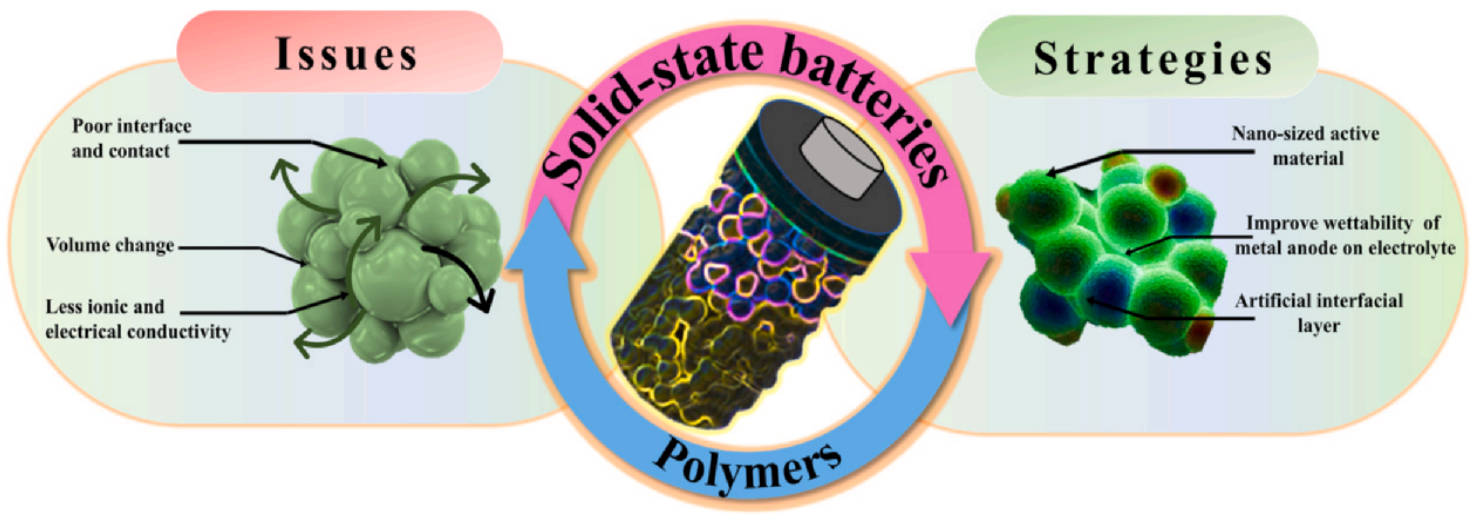
Conventional metal-ion batteries depend heavily on flammable organic liquid electrolytes, which pose serious fire risks and allow metal dendrites to grow during repeated cycling, leading to short circuits and catastrophic failure. Solid-state batteries replace liquid electrolytes with solid alternatives, offering improved safety and higher energy density. However, solid-solid interfaces introduce new problems: poor contact, high resistance, mechanical cracking, and unstable interphase formation. These challenges become especially severe with rigid ceramic electrolytes, which often lose contact during volume changes. Based on these challenges, there is an urgent need for deeper understanding and optimization of electrode materials that are intrinsically compatible with solid electrolytes.
Researchers from Imperial College London and Universidad Carlos III de Madrid have published (DOI: 10.1016/j.esen.2026.100033) a detailed review on polymer electrodes for solid-state metal-ion batteries. The study appears in the journal eScience Energy (2026, Volume 2, 100033). The team, led by Prof. Dr. Bidhan Pandit, critically evaluates major classes of polymer electrode materials—including conducting polymers such as polyaniline and poly (3,4-ethylenedioxythiophene) (PEDOT), as well as redox-active polymers—and outlines design strategies to enhance performance through molecular engineering, cross-linking, composite formation, and interface modification.
The review emphasizes that successful solid-state batteries require intentional co-design of polymer electrodes and solid electrolytes rather than optimizing components separately. Conducting polymers store charge through delocalized π-electron systems and reversible doping processes, enabling intrinsic electronic conductivity alongside ion transport—a dual capability uniquely suited for solid-state architectures. However, the authors identify critical limitations: polymer swelling in liquid or quasi-solid electrolytes, limited ionic and electronic percolation, and interfacial instabilities at polymer-electrolyte contacts. To overcome these issues, the review highlights strategies including cross-linked networks, composites with carbon nanotubes or graphene, and in situ polymerization that allows electrolytes to conform precisely to electrode surfaces. The analysis also compares performance across lithium, sodium, zinc, and magnesium systems, showing that amorphous polymer electrodes work especially well for larger ions such as sodium. The authors further examine covalent organic frameworks (COFs) and metal-organic frameworks (MOFs), which offer ordered ion-transport channels and enhanced selectivity while maintaining mechanical compliance. These hybrid systems combine polymer flexibility with crystalline precision, opening new routes for interface-engineered electrolytes. The review also addresses practical challenges such as low-temperature operation, high-rate cycling, and scalable manufacturing, providing a roadmap toward commercially viable all-organic batteries.
“The key is thinking about polymer electrodes and solid electrolytes as one connected system rather than separate parts,” the authors said. “When you put a soft polymer electrode against a rigid ceramic electrolyte, the interface can become the weakest link—it cracks or builds up resistance. But by designing both materials together, using polymer-ceramic composites or in situ polymerization, we can turn that interface into a functional zone that actually helps the battery work better. The real opportunity is building all-organic batteries that are not only safer and more flexible but also easier to recycle and manufacture sustainably, using abundant, bio-derived materials.”
Flexible, solid-state polymer batteries could power next-generation wearable electronics, medical implants, and foldable displays—applications where rigid conventional batteries fall short. Beyond consumer electronics, all-organic batteries made from bio-derived materials could reduce dependence on geopolitically sensitive metals such as cobalt and nickel, lowering both environmental impact and supply-chain risks. Their intrinsic safety also makes them attractive for electric vehicles and grid-scale storage, where fire hazards remain a major concern. The review calls for integrated manufacturing approaches, including roll-to-roll printing and solvent-minimized processing, to scale up production. With continued advances in machine learning-assisted materials discovery and interface engineering, polymer-based solid-state batteries could offer a sustainable, flexible, and cost-effective alternative to today's dominant lithium-ion technology.
DOI
10.1016/j.esen.2026.100033
Original Source URL
https://doi.org/10.1016/j.esen.2026.100033
Funding information
BP acknowledges the Iberdrola Foundation under Marie Skłodowska-Curie Grant Agreement No. 101034297. CH acknowledges funding from the ERC Starting Grant (UKRI Guarantee fund EP/Y009908/1), and the Faraday Institution Research Programme grants FIRG060, FIRG082, FIRG066, FIGRG090. AV would like to thank the Agencia Estatal de Investigación (Spain)/Fondo Europeo de Desarrollo Regional (FEDER/European Union) MCIN/AEI/10.13039/501100011033 (project PID2022–140373OB-I00) and the Madrid Government (Comunidad de Madrid-Spain) (DROMADER-CM (Y2020/NMT6584)) for funding.
Lucy Wang
BioDesign Research
email us here
Legal Disclaimer:
EIN Presswire provides this news content "as is" without warranty of any kind. We do not accept any responsibility or liability for the accuracy, content, images, videos, licenses, completeness, legality, or reliability of the information contained in this article. If you have any complaints or copyright issues related to this article, kindly contact the author above.
