

Illinois put statues of WHO in the U.S. Capitol!?!
By Christopher Wills
Back in 1864, Congress decided it would be a nice idea to honor notable Americans by displaying statues of them in the U.S. Capitol. There would be two statues from each state (including the Confederate states once they were back in the fold). President Abraham Lincoln signed the measure on July 2, 1864. Today the list of people honored in Statuary Hall includes George Washington, Helen Keller, Johnny Cash, and King Kamehameha. Representing Illinois are Frances Willard and James Shields.
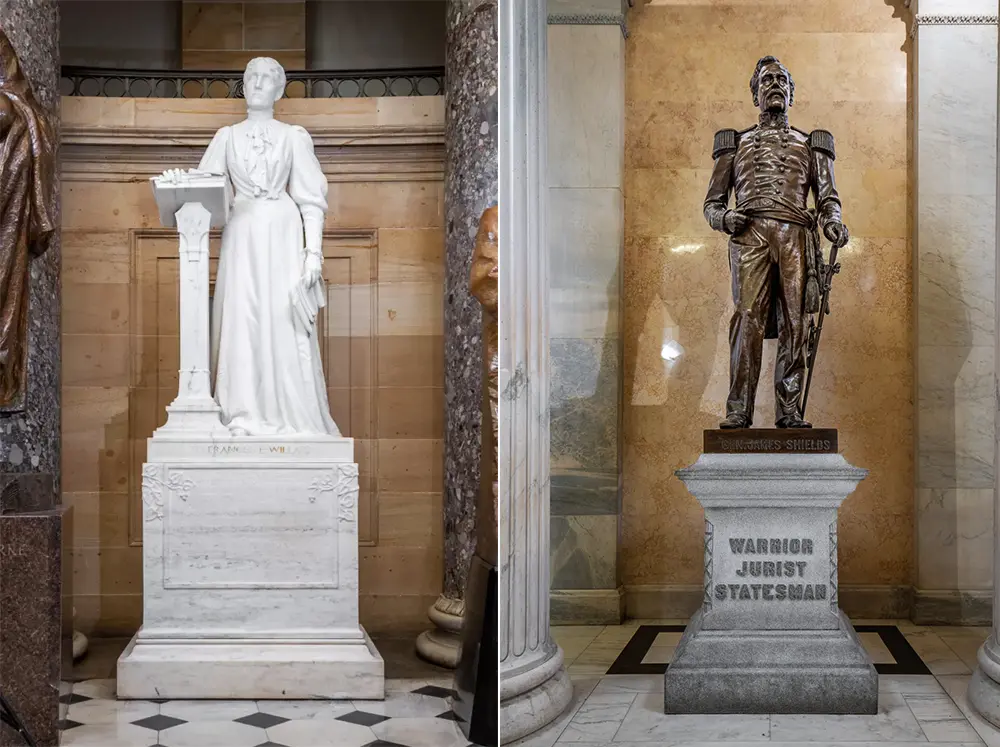 The Willard and Shields statues at the U.S. Capitol. (Architect of the Capitol)
Willard was national president of the Women’s Christian Temperance Union for nearly 20 years, an advocate for women’s voting rights, and the first dean of women at Northwestern University. She worked to raise the age of consent for sex, create an eight-hour workday, and reform prisons. Her work contributed to the passage of constitutional amendments letting women vote and prohibiting alcohol. (You can read more about her here at the National Women’s Hall of Fame website.) So she may be mostly forgotten today, but she clearly played a leading role in some major issues of the late 1800s.
 Frances Willard in the 1890s. (Library of Congress)
But who is this Shields guy and why does he have a statue?
He was a 19th century politician and soldier with a remarkable career, but Shields is best remembered today for getting so upset over something Abraham Lincoln wrote that he challenged Lincoln to a duel. (Mary Todd had a hand in writing the anonymous satirical letters with her fiance, but the social codes of the day did not include challenging women to duels.) Lincoln accepted the challenge and the two men nearly engaged in combat that could have ended with the future president dead or disgraced. Luckily, Shields suffered an attack of common sense after seeing long-armed Lincoln with a cavalry broadsword in his hand and the duel was canceled. (Read more about that episode here.)
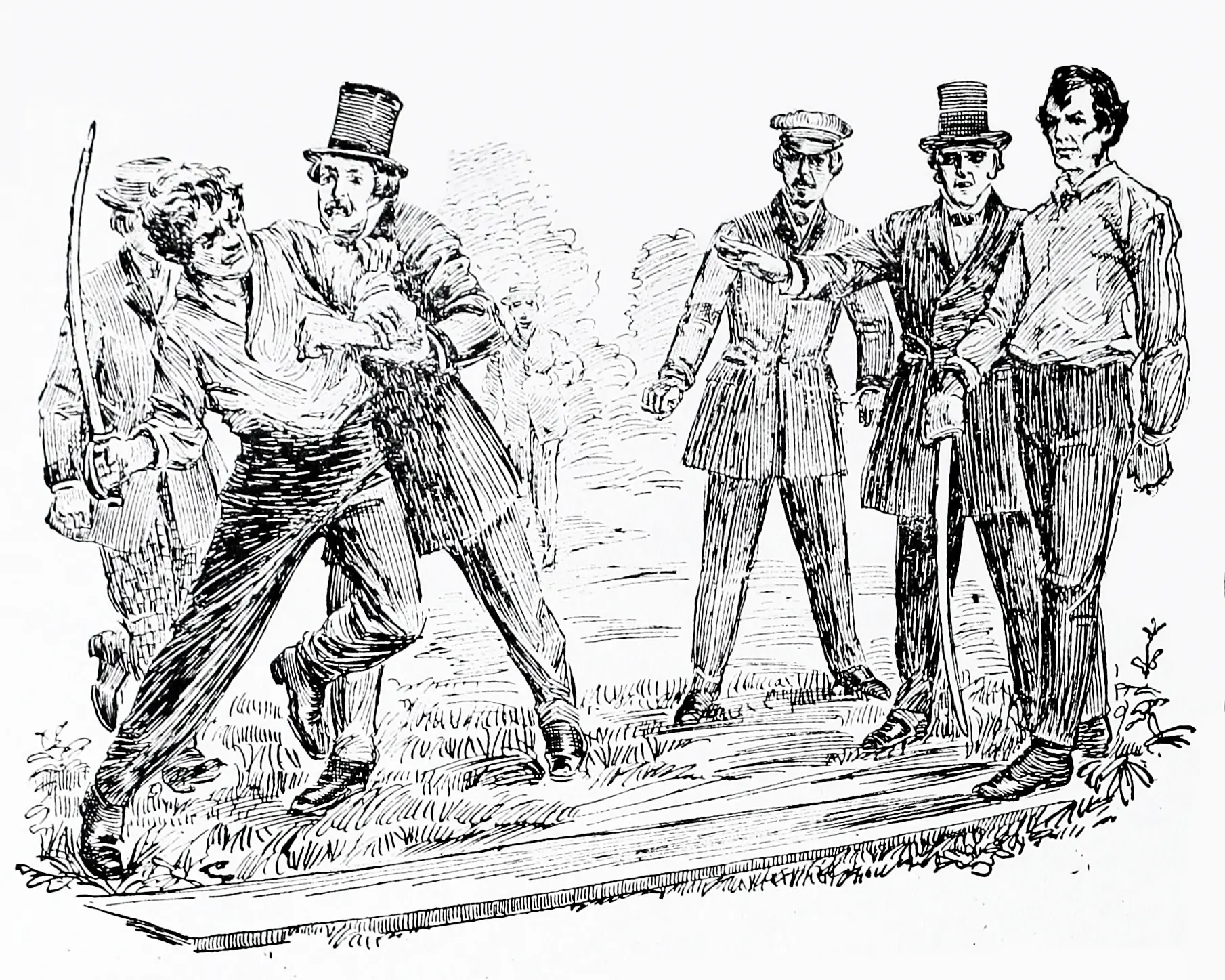
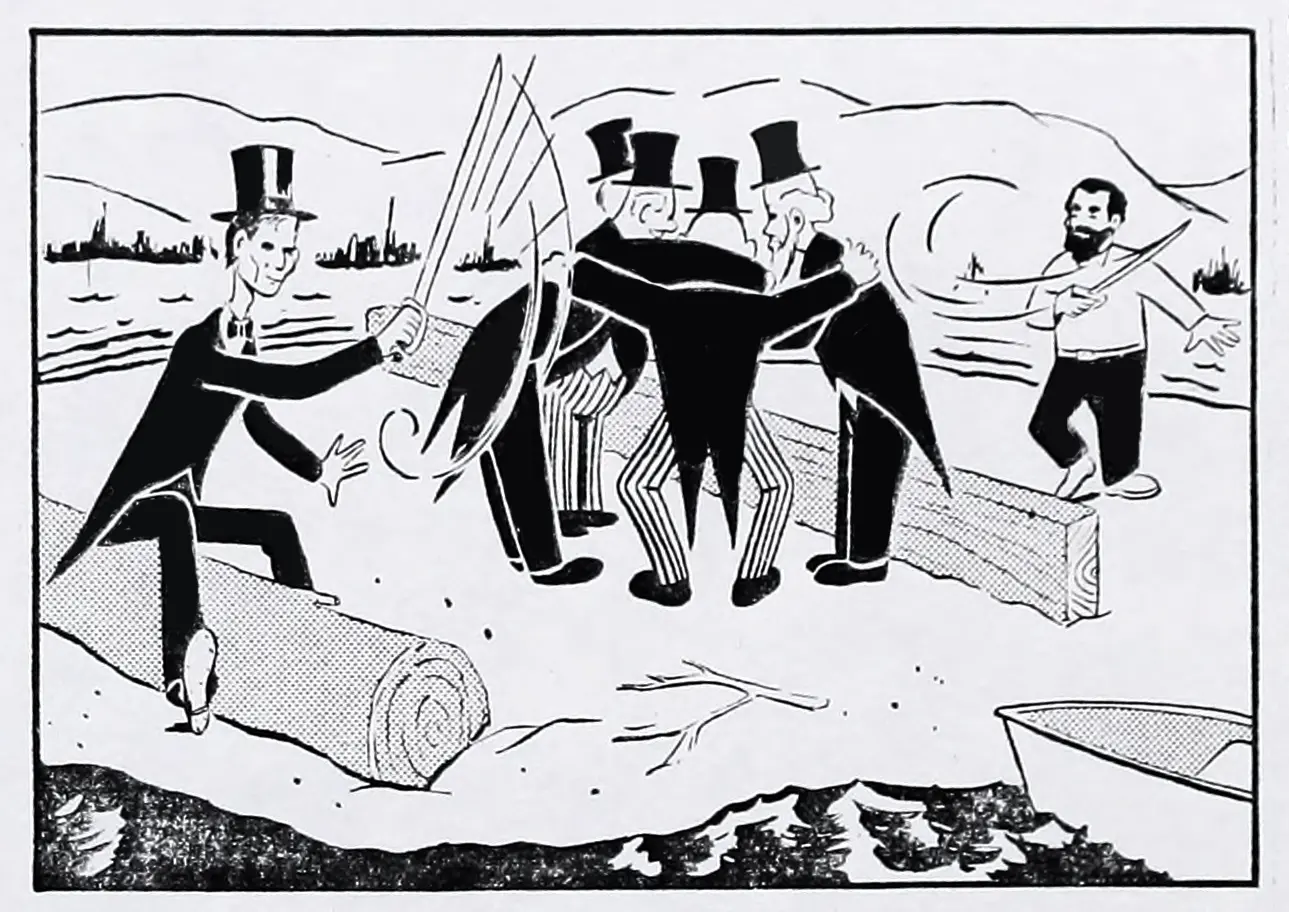 Later newspaper illustrations depicting the almost-duel. (Public domain)
Lincoln was deeply embarrassed by his role in the disagreement. He rarely spoke of it afterward. So, why did the Land of Lincoln choose Lincoln’s antagonist for one of its two statues? Because Lincoln and Shields eventually mended fences and because Shields went on to serve his country in two wars and become a U.S. senator from three different states, something no one else has ever done.
When Lincoln tangled with him in 1842, Shields was the Illinois state auditor. He later served on the Illinois Supreme Court and then led the U.S. General Land Office. When the United States went to war against Mexico, Shields was appointed a general and was twice wounded in combat.
After the war, the Irish immigrant ran for the Senate from Illinois and won, but it turned out he had not been a U.S. citizen long enough to serve. He resigned, waited briefly until he met the nine-year threshold and then ran again in the special election to fill the vacancy created by his own resignation. He won again and this time he was able to serve.
 Shields around the time he represented Illinois in the U.S. Senate. (Library of Congress)
Six years later, in 1855, Shields ran for re-election but lost. (Lincoln was among those who challenged Shields, but he was also defeated.) Shields figured it was time to make a fresh start elsewhere. He moved to Minnesota, founded a town (Shieldsville) and briefly served as one of the new state’s senators.
His next stop was California, which appointed him a brigadier general when the Civil War erupted. Shields enjoyed some success on the battlefield and was wounded again. President Lincoln sought to promote him to major general, but the promotion was blocked by Congress. Upset by the rejection, Shields resigned from the military and returned to California.
After the war, Shields moved to Missouri, where he was pressured to run for the Senate in 1868. He appeared to have won, but election officials rejected the results from two counties and declared another man the winner. (Strangely, members of Congress refused to accept Shields as the winner but still voted to give him a year’s salary.) Shields’s third and final stint as a senator came in 1879 when he served three months to fill the unexpired term of a Missouri senator who had died in office. (Learn more about Shields’s life here and here.)
So, to sum up, Frances Willard spent decades trying to improve living and working conditions for the poor. Meanwhile, James Shields served his country in the military and in public office but is best remembered for a temper tantrum that almost led to physical violence against Abraham Lincoln.
Wills is the ALPLM communications director.
Legal Disclaimer:
EIN Presswire provides this news content "as is" without warranty of any kind. We do not accept any responsibility or liability for the accuracy, content, images, videos, licenses, completeness, legality, or reliability of the information contained in this article. If you have any complaints or copyright issues related to this article, kindly contact the author above.
